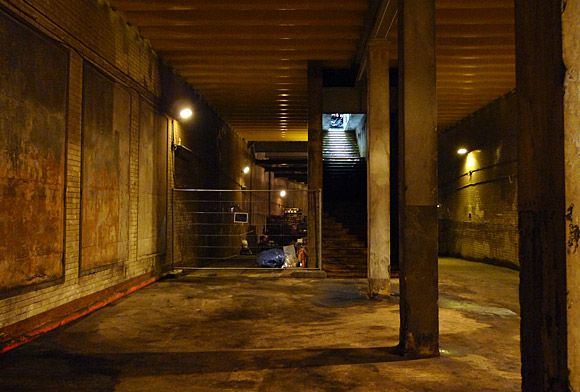
 This week I focused on deciding on my location I went with using the disused tramway in Holborn. I think is the most effective location to use as its shape is simple and thus it will be easier and effective to remodel I also think after doing my research I think I would be able to get natural light into the tunnel, however I did find out that it is over 2 miles long. Therefore I have decided to not use the whole tunnel. I am going to use it from the entrance at Kingway -Holborn along to the River at Waterloo. After deciding this I took a trip to the my site. This was extremely helpful as I had the chance to talk to someone working on the tunnel. He told me the length of it as well as many of the previous uses for it, I had the chance to see the beginning of the interior of it.
 I watched a documentary called the Dark Days about homeless people living in the underground tunnels in New York. They called these places each other houses. This gave me a great insight into homelessness and living underground - this also lead me to want to turn my tunnel in to some form of homeless shelter.
On from this I starting thinking of how I was going to get natural light into the tunnel as the people I asked did say they wanted natural light.I experimented with using mirrors to reflect light into the tunnel after watching various different videos about bouncing light. I discovered that the closer to the wall I could get the mirror the more light it would reflect down the tunnel. This was challenging because I am only going to be able to reflect light so far down the tunnel as I only have one end which is able to get natural light in as the other end of the tunnel is too far way.

I also explored how a tunnel could have various different roof styles that let light in in different spaces and at different strengths. This would be a very effective way of getting light in however there may be different things above the tunnel - roads for example even the Thames therefore making it challenging to get light in, in these different spaces.
This lead me to discover an installation piece create in New York by Rafael Lozano-Hemmer called Voice Tunnel, this piece amazed me. Lozano- Hemmer transferred a 1400 foot long park avenue tunnel by using 300 lights and 600 sound scenes. He said he wanted to create a space that brought people together as well as creating something ephemeral. The light projected in the tunnel was controlled by the sound people made in the tunnel.
Following this I started looking a what a shelter would need and flow patterns in that form of space.

No comments:
Post a Comment